
The Future of Education: How Artificial Intelligence is Transforming Learning
The Future of Education: How Artificial Intelligence is Transforming Learning is no longer a dream. AI is creating smart classrooms and global access.
The old chalkboard era is gone. Today, we stand at a point where computers are not just a tool, but a “personal tutor.” The future of education isn’t something far-fetched, but a reality today. Imagine what would happen if every child was taught at their own pace? AI in education is making this dream a reality.
Education 3.0: Are you ready for the smart classrooms AI revolution?
Traditional classrooms have been around since the industrial era when everything revolved around mass production. However, this trend is fading as we enter “Education 3.0.” Here, the focus will be less on physical classrooms and more on integrating EdTech into the learning process. Are the current infrastructures ready to accommodate students whose smartphones contain more knowledge than the school curriculum?
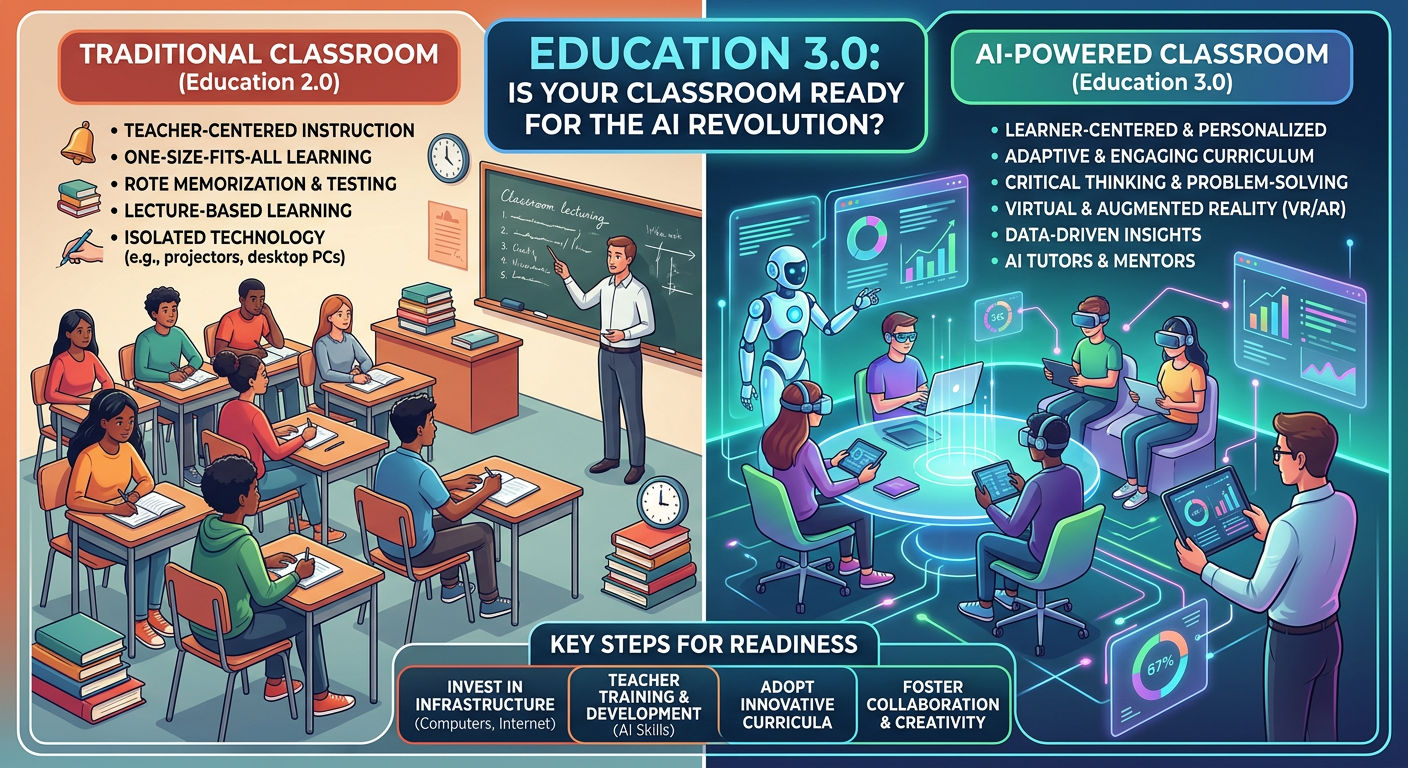
1. Goodbye "One-Size-Fits-All": The Magic of Personalized Learning
Thanks to personalized learning, artificial intelligence algorithms analyze a particular student’s learning style, speed, and emotional state. If a student is struggling with a certain topic within the framework of physics lessons, AI doesn’t just reiterate the sentence that didn’t click for a student before. Instead, it offers various approaches, including video simulations, gamified quizzes, analogies from the real world, etc., until a student finally gets the light bulb moment. This means that all learners are kept in the loop while high performers are adequately challenged.
2. Smart Classrooms: Breaking the Walls of Traditional Schooling
Moreover, thanks to Artificial Intelligence in learning, a new trend is evolving: “Immersive Education.” For example, a student in the history class is no longer restricted to reading books on the French Revolution; he or she can experience it firsthand with the help of AI-enabled VR. Data collected from such smart environment helps school staff design classes and buildings’ layout with a view to optimizing productivity and reducing fatigue.
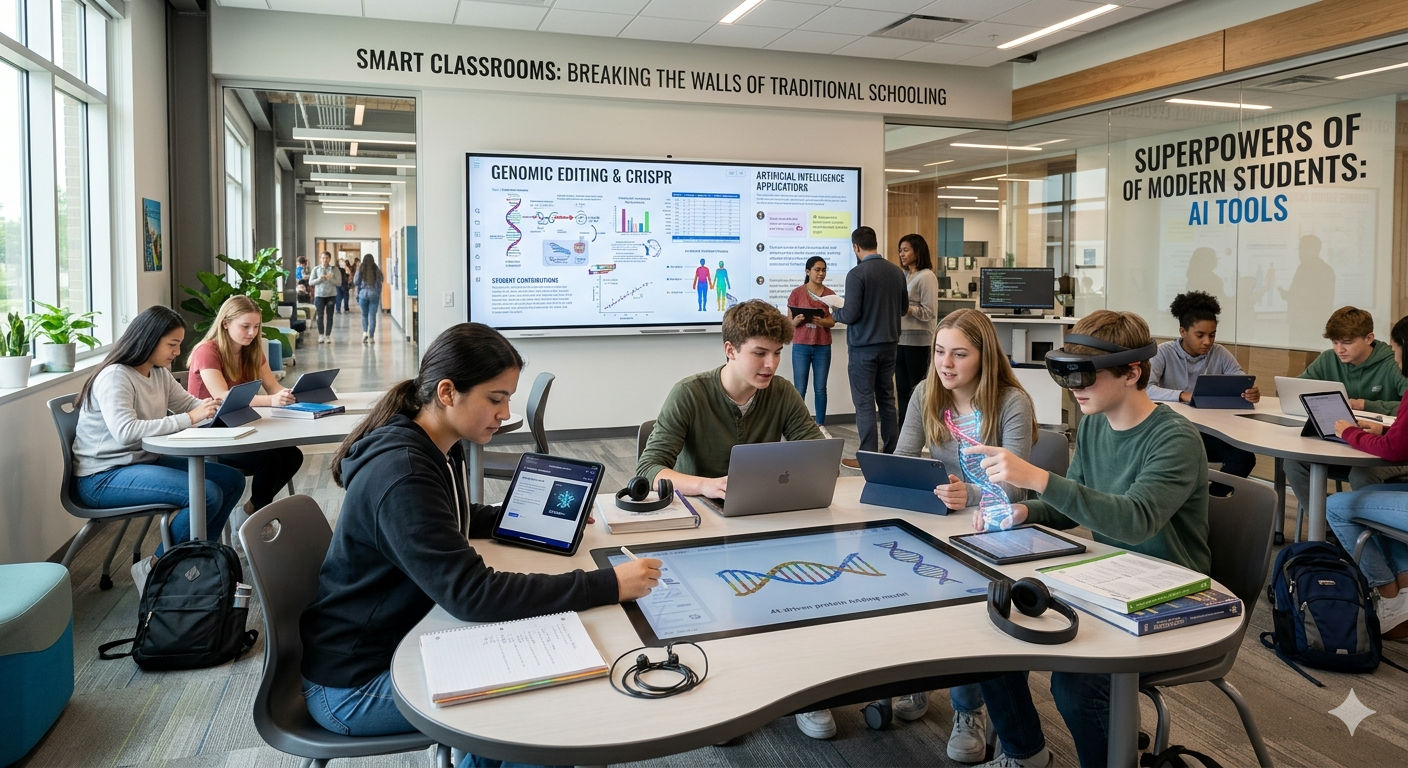
3. The Superpowers of Modern Students: Artificial Intelligence Tools for Students
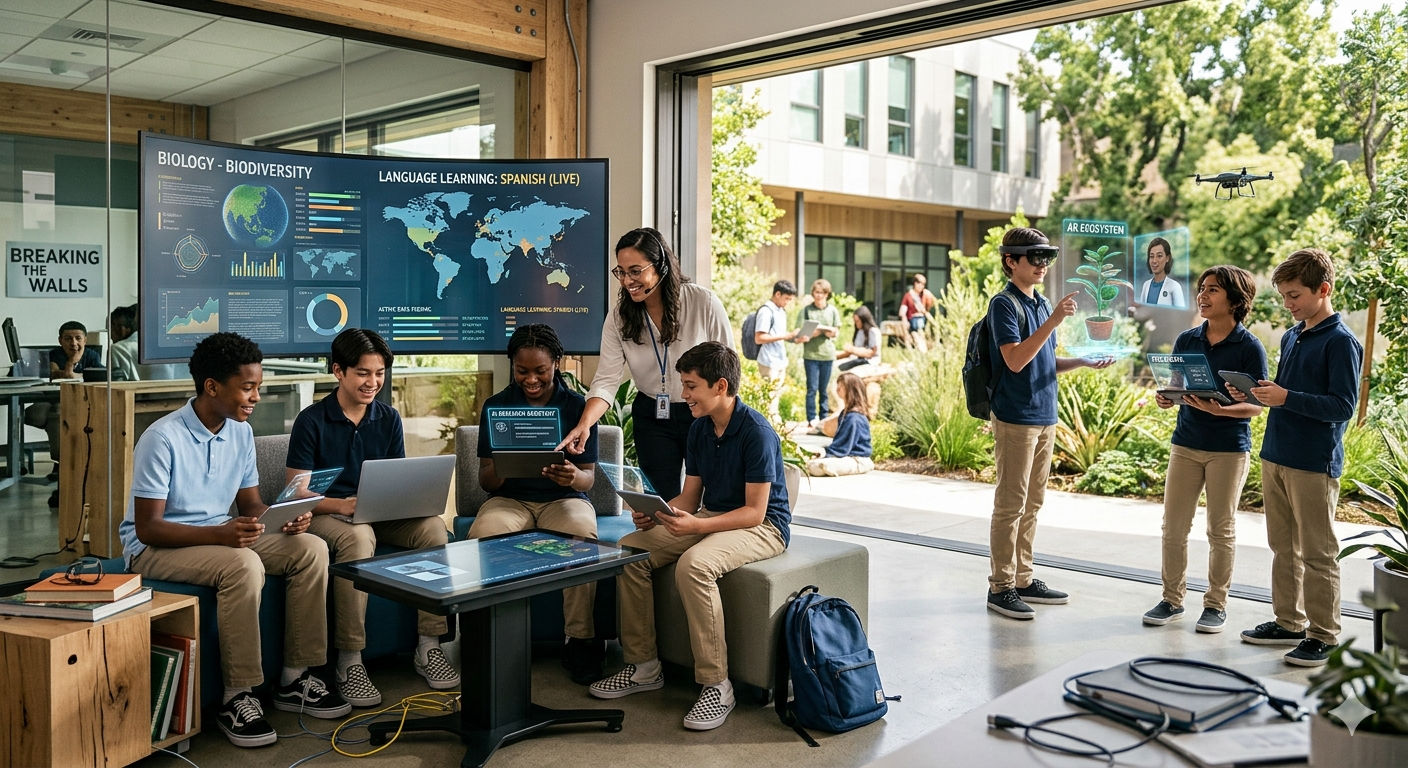
The modern student can no longer confine himself only to the library since he is now endowed with some “superpowers,” and these are Artificial Intelligence tools for students. Below are some examples of AI tools for students, who are acting as 24/7 personal mentors.
- Intelligent Tutoring Systems: Programs that provide feedback right away when there are errors found in mathematical equations and programming codes.
- Research Assistants: Tools allowing a student to read and understand thousands of documents instantly.
- Adaptive Language Learning: Apps capable of correcting students’ pronouncing skills with the help of machine learning.
Not only are these technologies giving the answer but also the journey leading to the answer itself which gives a chance to learn deeply about the subject matter.
4. Why Teachers Love AI: From Paperwork to Path-breaking Mentorship
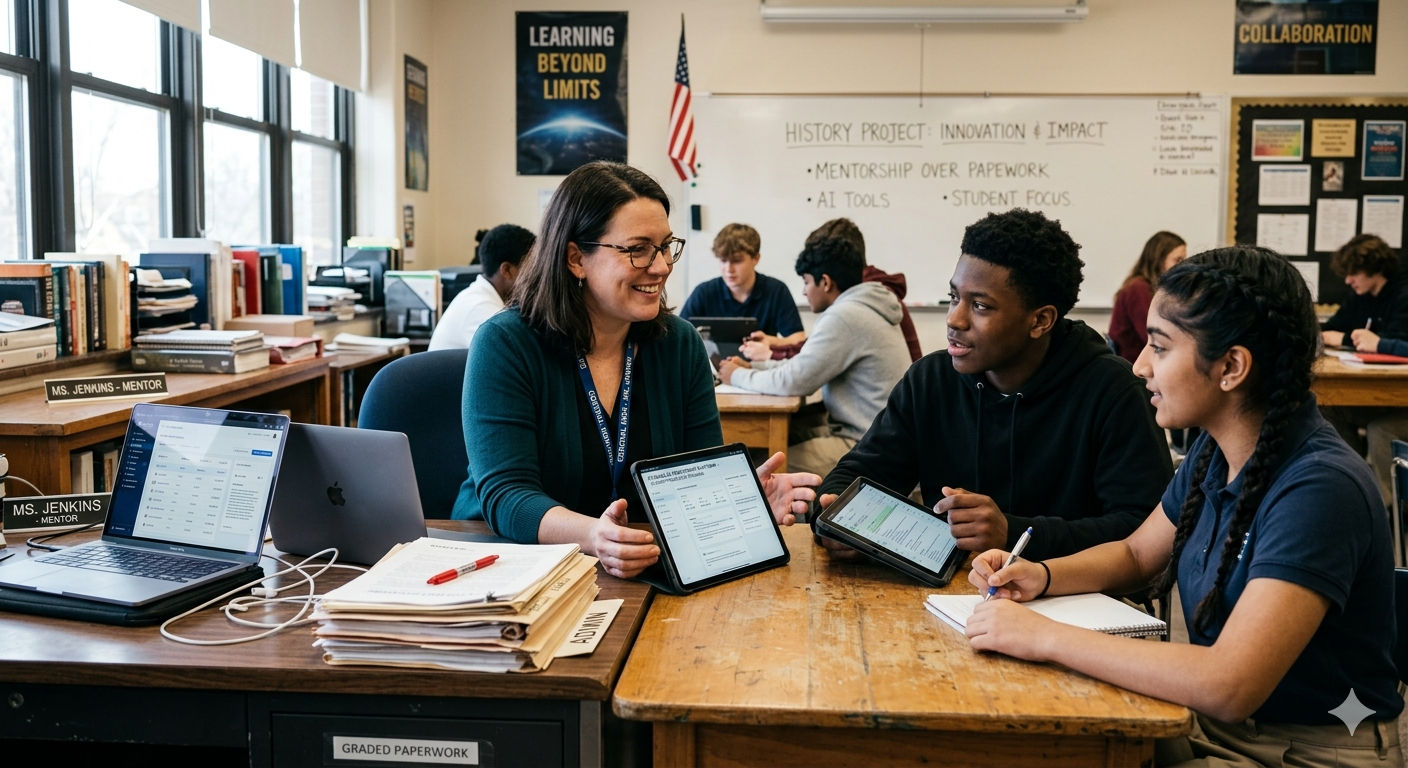
One misconception people tend to have regarding AI in the educational sphere is that soon it is going to take all teaching jobs away. The truth is quite opposite to this as AI is going to be the best friend for teachers. At the moment, educators are spending almost 50% of their time performing “robotic” tasks like grading assignments, planning lectures, and counting students’ attendance.
With the help of AI in education, teachers can free themselves from all those “robotic” activities and turn to a completely new role – from an “information dispenser” to a “path-breaking mentor.” Instead of spending his or her Sunday night checking and correcting 100 essays of one course, a teacher is going to have a talk with a student on Monday morning who is experiencing some troubles with motivating himself/herself.
5. Digitization in Schools: The Revolution of "Smart Campus"
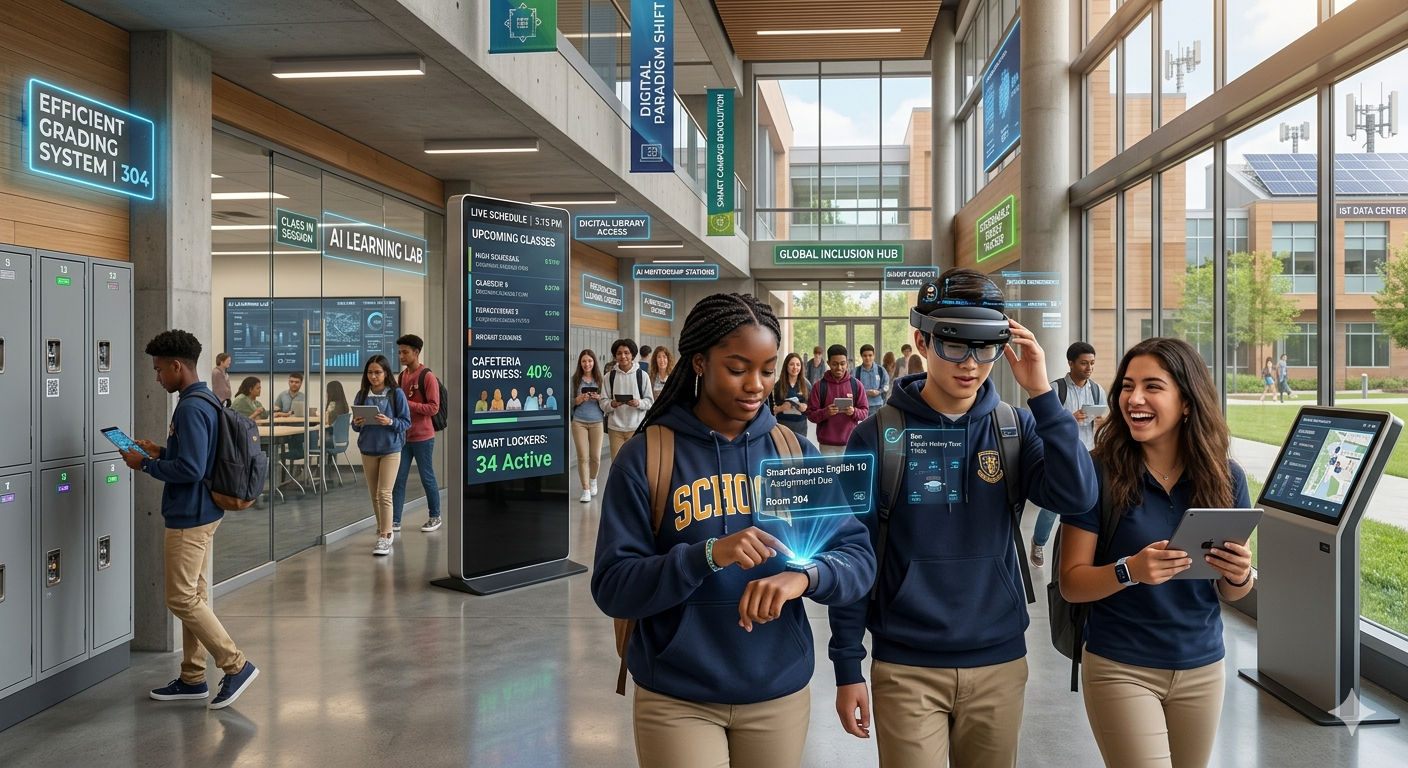
Digital transformation in schools is being seen not only inside the classrooms but also in the entire management system of the schools. Nowadays, AI has become the “brain” of school administration.
This means:
- AI Smart Attendance and Safety: The AI software, with the help of facial recognition technology or geo-fencing, can keep a check on the safety and attendance of kids.
- Resource Management: With the help of AI, the usage rate of the resources, like the school library, lab, and sports equipment can be analyzed for proper allocation of finances.
- Prediction & Preemptive Measures: It has become possible to know about the child who might find studying difficult and, therefore, requires special attention. This way, schools can also predict that any kid can drop out of his/her studies.
6. Crossing Barriers: Universal Accessibility & Global Inclusion
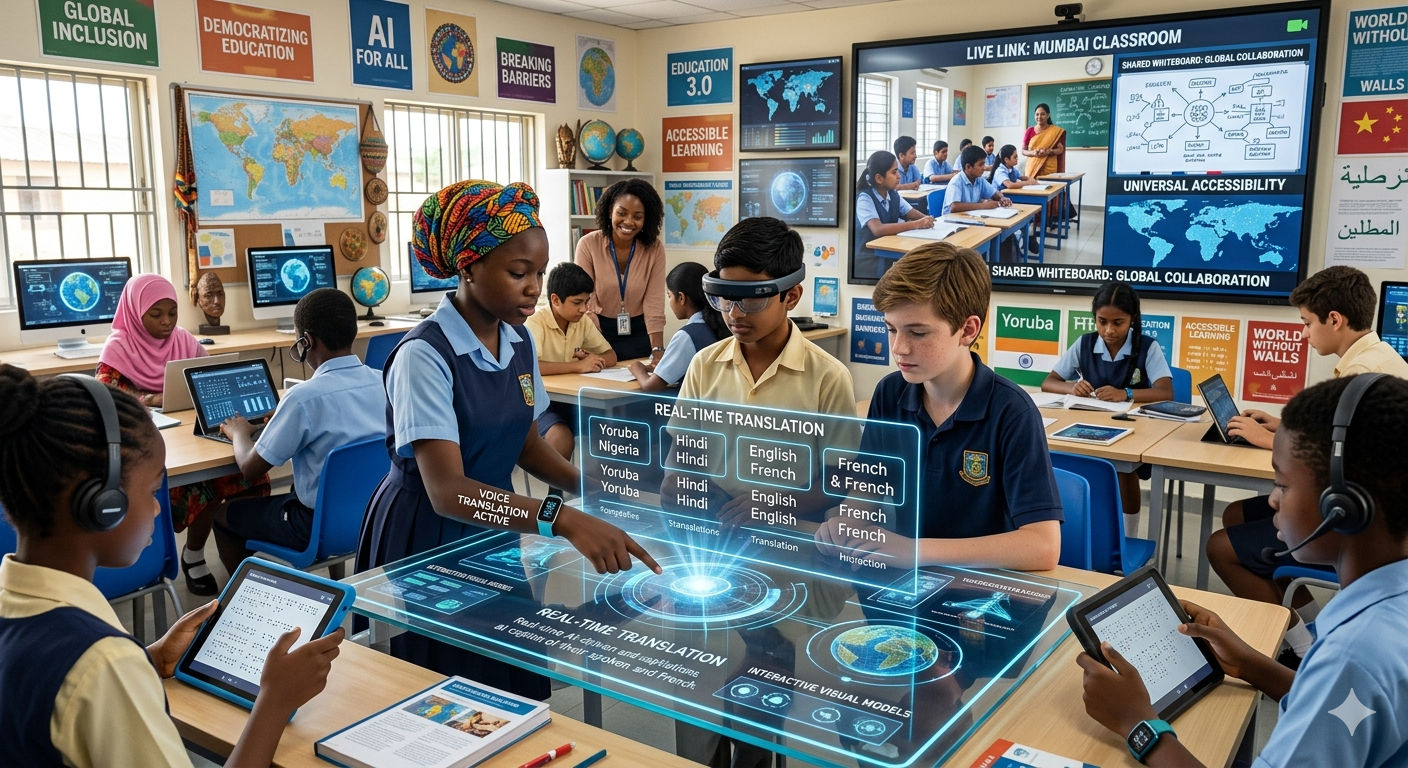
The most incredible thing about AI is that it has made education “borderless.” The use of AI in learning has eliminated all those hurdles which used to create barriers because of either linguistic differences or disabilities.
- Real-Time Language Translation: With the help of AI technologies, a learner can hear the lectures delivered in any language; if the lecture is in English, he/she can translate it in Hindi or any other regional language.
- Special Needs Children: Technologies like speech-to-text or text-to-speech technologies benefit specially abled children.
- Global Collaboration: Platforms based on AI technologies enable children to interact with experts and peers globally. Truly speaking, with “universal access,” education has become extremely democratic because talent requires nothing but an internet connection.
7. The Road Ahead: Challenges and Ethical Learning
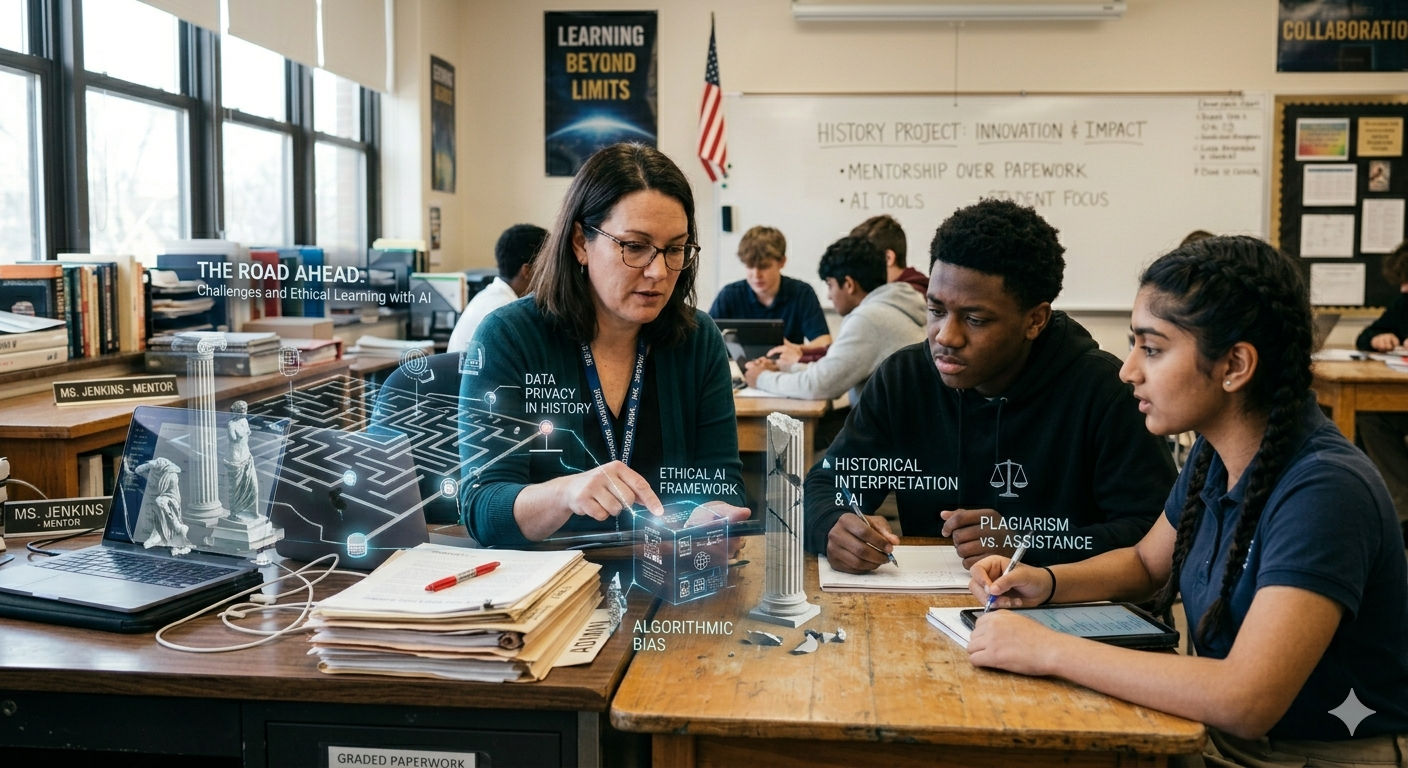
Great power goes hand in hand with great responsibility. As AI integrates into the field of learning, we should be careful in this matter.
- Data Privacy: How to secure personal data of young people within the framework of an AI-driven learning environment?
- The Digital Divide: In order to prevent an even bigger digital divide, we should assure EdTech affordability for everybody.
- Academic Integrity: It is important to train students to perceive AI not as a tool to cheat, but as an opportunity to collaborate with an AI-powered assistant.
All of this should result in the idea of “Ethical Learning” or using modern technologies without undermining moral and intellectual standards of humanity.
Conclusion: Embrace the Change
Artificial Intelligence in learning isn’t just a trend, it’s a necessity. If we don’t change with the times, we’ll be left behind. EdTech and AI together are creating a future where learning will be easier, cheaper, and accessible to everyone.
Are you ready for this new era?